
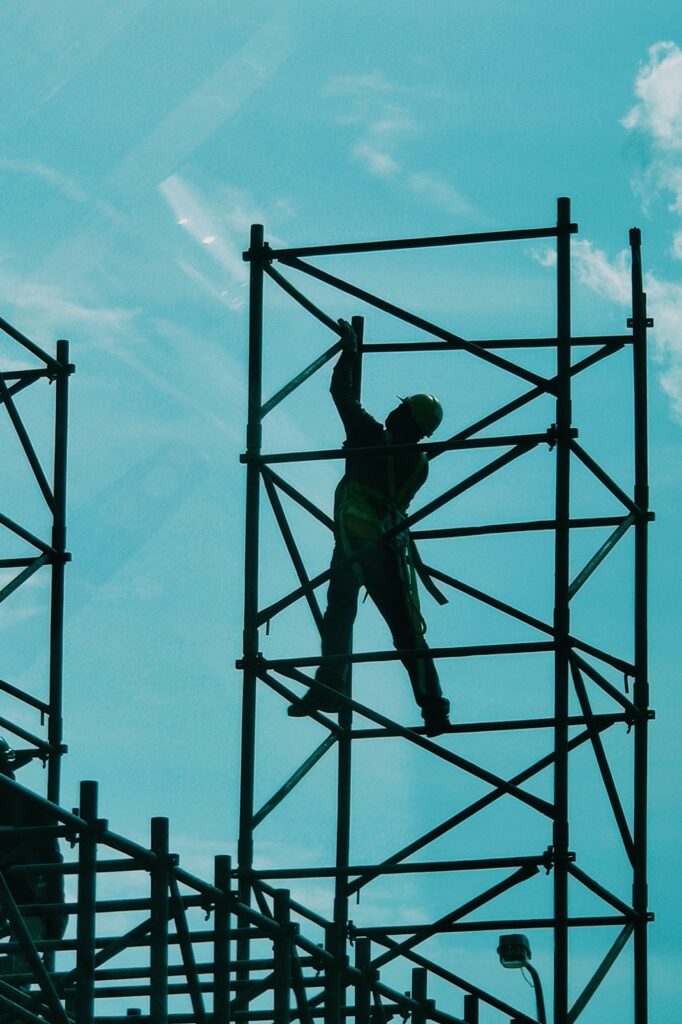
Working at height, in confined spaces, or by the roadside are just three of the environments you may find yourself working in while working in construction.
It’s obvious that all three of the above examples come with their own set of dangers, whether it’s the risk of a fall, being trapped when something’s gone wrong, or the danger of being hit by a fast moving vehicle, it’s extremely important that not only are you aware of the risks these pose but also that your health is of a suitable level that you won’t be putting yourself or anyone else at risk by working around them.
Do I Need a Safety-Critical Medical?
Risk Assessments should be performed by an employer for all activities to determine whether they class as safety-critical, and establish whether, if a worker were to be incapacitated it would result in a significant risk of harm to the individual worker performing the task or to others.
Your employer has a legal obligation to ensure the safety of the workers on their site and so may require you to undergo a safety-critical medical not only for your benefit, but for the benefit of others as well.
If you’re self-employed you may be required to obtain a safety-critical medical certificate to prove you are fit enough to perform the role you will be undertaking on a customer’s premises.
Some of the roles which require a safety critical medical include:
- Drivers
- Fork-lift Truck Operators
- Any employee working at heights
- Any employee working in a confined space
- Lone workers
- Night workers
- Roadside workers
It is vitally important that safety-critical workers aren’t suffering from any medical conditions or undergoing any treatment which could result in a sudden loss of consciousness or incapacity, impairment of awareness, concentration, balance or coordination or significant limitation of mobility.
What is a Safety-Critical Medical?
Safety-critical medicals are in-depth medicals designed to ensure that someone performing a safety-critical task is fit to do so.
Definition of a Safety-Critical Work: “Where the ill health of an individual may compromise their ability to undertake a task defined as safety critical, thereby posing a significant risk to the health and safety of others.”
The tests required to be undertaken as part of a safety-critical medical for someone working in construction will usually be:
- A health questionnaire to establish any current or previous medical history.
- General health checks, including weight, height, body mass index, blood pressure, pulse, urinalysis for blood and proteins, and a finger prick test for glucose and cholesterol.
- An Audiometry (Hearing) Test.
- A Lung Function Test.
- An Eyesight test.
- A skin check.
- Mobility assessment.
Where does Aardvark come in?
We’re able to perform Safety-Critical Medicals either at our office or, with our fleet of Mobile Medical Centres, we can come to your site with everything we need, including the space to perform the assessments, giving you one less thing to have to think about.