
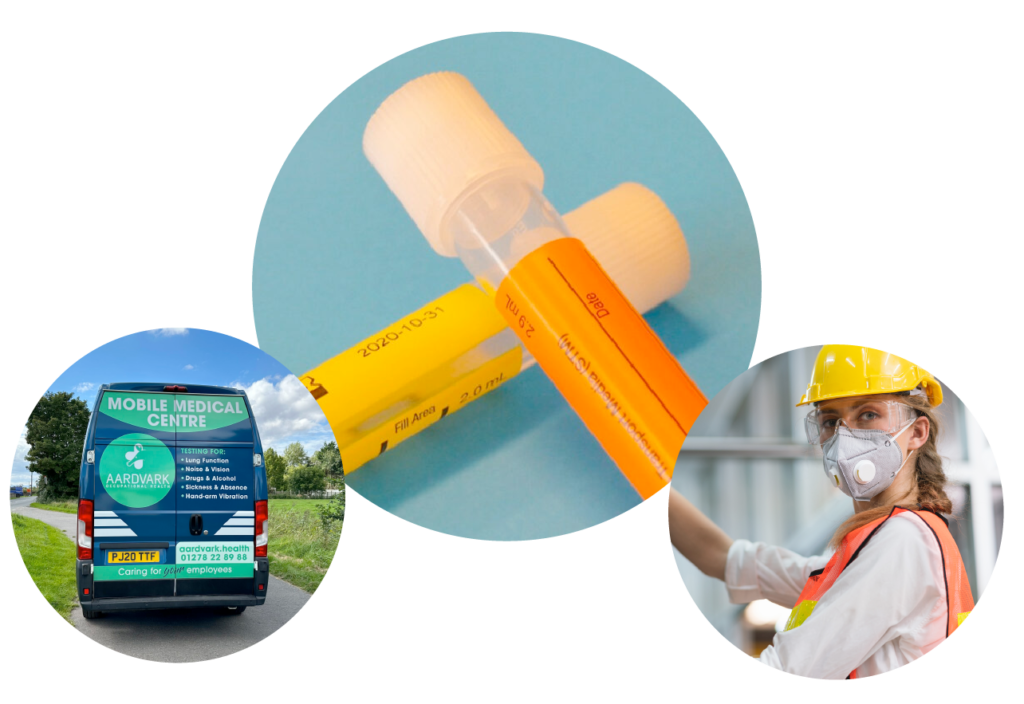

The Control of Substances Harmful to Health Regulations (COSHH) ensures all employees exposed to various harmful substances are protected in the workplace.
Each employer must perform COSHH risk assessment to identify any substances or processes harmful to health.
We can offer a wide range of screening for harmful chemicals and substances.
The common ones are listed on this page. If you have a question please Contact Us.

Where there is a legal requirement to control work exposure, health surveillance is a useful resource for determining the effectiveness of control measures.
In the case of styrene, isocyanates, nickel and chromium a urine sample taken from the worker at the end of their shift/working week can measure the level of absorption. The frequency of testing is dependent on the level of exposure. Annual screening is a common practice for checking the effectiveness of the controls and any exposure to workers.
Prevention of exposure will help to minimise risk. For example:
- The use of extraction equipment and control measures
- Use of PPE
- Use of respirator
- No eating or drinking in areas of potential exposure
In the case of skin exposure, the occupational health doctor or nurse will examine the skin and ask you to complete a screening questionnaire to identify any symptoms. Or this examination can be done by a Responsible Person who has been trained by Occupational Health in skin surveillance and has the support of Occupational Health in the event of any problems being identified. Aardvark Occupational Health can provide training for a Responsible Person to take on this role.

Styrene
Styrene is a synthetic chemical used in the manufacture of plastics, rubber and resins.
Styrene can cause damage to the central nervous system with the following symptoms- headache, fatigue, confusion, drowsiness, poor concentration and feeling of intoxication. Styrene can cause irritation to the eyes, skin and upper respiratory tract. Acute exposure may result in gastrointestinal symptoms. If inhaled styrene can cause pulmonary oedema, cardiac arrhythmia, memory loss and progressive loss of consciousness leading to coma.
It is a legal requirement to control exposure to styrene to a level which is below the workplace exposure limit. Health surveillance is a useful resource for determining the effectiveness of control measures. This involves taking a urine sample from the worker at the end of their shift/working week and measuring the level of styrene by-products in the urine. The frequency of testing is dependent on the level of exposure. Annual screening is a common practice for checking the effectiveness of the controls and any exposure to workers.
Isocyanates
Isocyanates are chemicals found in a number of products used in the construction industry. They are present in polyurethane paints, coatings, foams, glues and flooring and can be present in high concentrations in the atmosphere if sprayed.
Isocyanates are a significant cause of occupational asthma causing chest tightness, persistent cough, wheezing, breathlessness and flu-like shivers. They can also cause irritation of the skin (dermatitis) and mucous membranes.
Isocyanates can enter the body through inhalation or skin exposure.
In severe cases isocyanates can cause severe pulmonary oedema, injury to the lung walls, severe corneal damage and can be fatal.
Lung function tests are used to monitor the effects of isocyanates on the respiratory system.
Exposure in the workplace should be monitored to prevent risks to health. It is possible to detect the levels of isocyanates in urine and this helps to determine whether the controls that are in place are effective; the specimen is taken towards the end of a working day and week to ensure it gives a more accurate exposure value.
Nickel
Nickel is a silver- grey metal and it can present a danger to health depending on how it is processed and how it can get into your body.
Nickel is used in industry in the following ways:
- As part of an alloy in the manufacture of stainless steel, coins, magnets, chemical and food processing equipment and in aerospace industry
- Welding
- Pigments for paint pottery glass and plastics
- Electroplating
- Catalysts in the chemical industry.
Nickel can enter the body by inhalation of dust, fumes or mist, or through the skin via dust or solutions containing nickel.
Nickel can cause the following effects:
- Short term – irritation of the skin, eye irritation
- Longer term – allergic reactions in the skin and respiratory tract and asthma; inflammation of the lungs; cancer of the nose sinuses and lungs.
Prevention of exposure is the first line of approach to minimise risk, this includes the use of extraction equipment and control measures: for example PPE, respirators, no eating/drinking in areas of potential exposure.
Monitoring can be undertaken by an occupational health team. A urine sample is assessed to measure the content of nickel in the urine. The frequency of testing is dependent on the level of exposure, annual screening is a common practice for checking the effectiveness of the controls and whether there has been any exposure to workers.
This test must be taken at least in the middle of the working week to give a more accurate result.
The doctor or nurse will examine the skin and ask you to complete a screening questionnaire to identify any symptoms. Or this can be done by a Responsible Person who has been trained in skin surveillance and has the support of occupational health in the event of any problems being identified.
Chromium
Chromium can be in metal form or other compounds; different formats present different hazards. Chromium IV has the most significant impact on health in the form of chromates, dichromates and chromic acid.
Chromium compounds are found or used in many processes and products:
- In the production and welding of stainless steel and the chromium alloys
- Pigments for paint and pottery, dyestuffs, leather tanning agents
- Catalysts in the chemical industry
- Electroplating/anodising
Chromium enters the body via the skin, breathing in dust or fumes, ingestion when eating or drinking contaminated food products.
The Chromium IV compound poses the greatest risk to health, and it is in the format of chromates, dichromates and chromic acid.
Single exposure to chromium IV can cause the following:
- Irritation and inflammation of the nose and upper respiratory tract
- Irritation of the skin, burns and ulcers
- Eye damage
Repeated exposure to chromium IV can cause the following:
- Ulceration of the nose and damage to the nasal septum
- Inflammation, allergic reactions, and cancer of the lungs
- Skin allergies
- Kidney damage
- Potential fertility issues and developmental problems with the unborn child
Prevention of exposure is the first line to minimize risk, this includes:
- The use of extraction equipment and control measures
- Use of PPE
- Use of respirator
- No eating or drinking in areas of potential exposure.
In the case of skin exposure, the occupational health doctor or nurse will examine the skin and ask you to complete a screening questionnaire to identify any symptoms.
This can also be done by a Responsible Person who has been trained by occupational health in skin surveillance and has the support of occupational health in the event of any problems being identified. Aardvark Occupational Health can provide training for a Responsible Person to take on this role.
Join our satisfied clients
Experience the impact of our Audiometry Service in your business
“Using Aardvark’s mobile OH unit has meant we can easily fit in health screening into the working day”

Engineering Manager, Exeter
